September fifteenth ended without an oven. The loading dock held only rainwater. Atlas claimed the bakery's electrical certificate had arrived too late. Its confirmation required the certificate by September twelfth. The municipal inspector had sent it on September eleventh. Atlas's reply acknowledged receipt.
RAFAEL
There is nothing to unload.
NAOMI
They say we failed the condition.
MERCER
Show me the certificate and their acknowledgment.
RAFAEL
They had it four days before the delivery date.
An express condition can control whether performance becomes due. Here the record supports satisfaction; we need not ask the court to excuse an unmet condition.
SCENE 2 · PDF PAGE 31
The Demand
Before the missed delivery, Atlas's shifting explanations had created reasonable insecurity. I had sent a written demand for adequate assurance and offered evidence of Riverside's ability to pay the remaining original price. Atlas answered with an unequivocal refusal to deliver unless the surcharge was accepted as final. We treated that refusal as a disputed repudiation.
MERCER
Confirm performance on the original terms and identify the scheduled unit.
ATLAS MANAGER
There will be no delivery without the extra fifteen thousand.
NAOMI
Do we simply wait a month?
MERCER
No fixed thirty-day holiday applies to an unequivocal refusal.
The reasonable assurance period depends on circumstances and cannot exceed thirty days under section 2-609. A clear repudiation raises a separate section 2-610 analysis.
SCENE 3 · PDF PAGE 32
The Shortage Defense
Atlas asked the court to excuse delivery as commercially impracticable. Its manager described uncertainty in the market. The produced inventory showed available units and deliveries to other buyers. We did not contend every shortage claim was false. We argued this seller had chosen a more profitable transaction rather than encountered an excusing contingency.
ATLAS COUNSEL
The market changed unexpectedly.
MERCER
Which event made this performance impracticable?
OKAFOR
Address the contract's risk allocation, available stock, and notice.
MERCER
And explain why these units went elsewhere while our client's was withheld.
Increased expense is not automatically impracticability. Genuine shortages require examination of basic assumptions, assumed risks, fair allocation where applicable, and timely notice.
SCENE 4 · PDF PAGE 33
Keep Baking
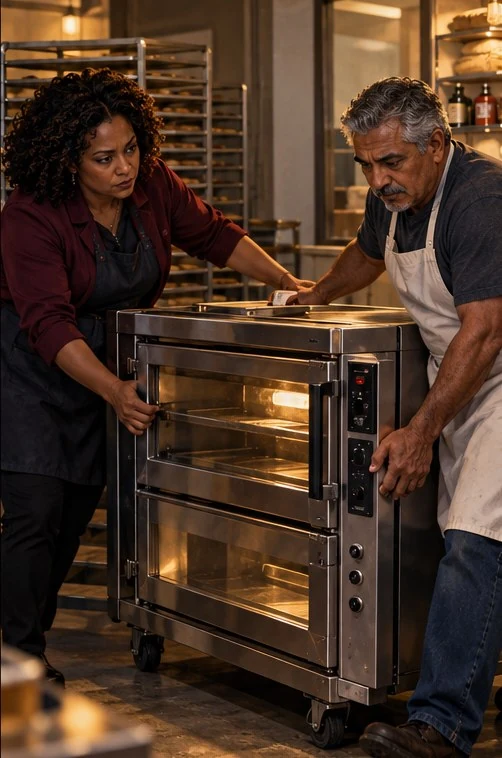
Rafael located a temporary oven from a neighboring business. It could handle some catering but not all of it. Naomi documented the rental cost, capacity, and orders saved. Priya tracked both lost margin and avoided expenses. I warned her that mitigation would affect recovery, but the law did not require unreasonable risk or impossible heroics.
RAFAEL
We can save Monday's order if we work in shifts.
NAOMI
And Tuesday?
PRIYA
Record what we can perform and the extra cost. Do not count saved revenue as a loss.
MERCER
Reasonable steps help the bakery now and make the later damages record honest.
Failure to cover does not eliminate all Article 2 remedies, but reasonably avoidable consequential losses ordinarily cannot be shifted to the seller.
THE LAW BEHIND THE STORY
Contracts study notes
Condition or promise
A condition is an event that must occur before a duty becomes due, unless excused. A promise is a commitment whose breach can support relief. One provision can function as both. Express conditions ordinarily require strict compliance, subject to doctrines such as waiver, prevention, and limits on disproportionate forfeiture.
Common law and sales differ
For many service contracts substantial performance may permit recovery subject to offsets; a material breach can suspend the other party's duties. Article 2's perfect-tender framework ordinarily allows rejection of nonconforming goods, but cure, installment-contract rules, agreement, acceptance, and notice requirements qualify that framework.
Insecurity versus repudiation
Section 2-609 requires reasonable insecurity and a written demand; commercially reasonable suspension may be available. Adequate assurance must arrive within a reasonable time, never more than thirty days. Under section 2-610, repudiation substantially impairing the contract's value permits specified responses. Retraction and reliance on the repudiation require further analysis.
Excuse must fit the event
Section 2-615 addresses impracticability and certain governmental constraints; where only part of capacity is affected, fair reasonable allocation and seasonable notice matter. Common-law impossibility and frustration of purpose have related but distinct elements. Foreseeability informs risk analysis, but contract language and allocated risks are central. A better offer is no excuse.