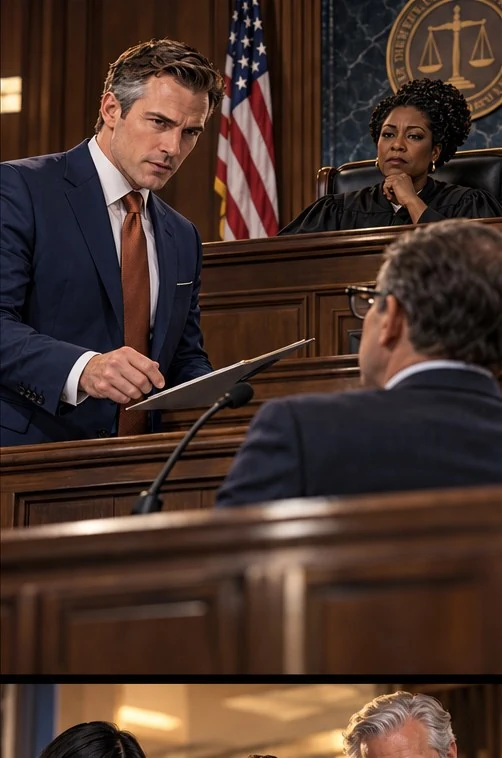
Months later, Atlas's case reached a bench trial by the parties' agreed procedure. The judge heard authenticated records and testimony. The manager admitted he had inventory when he demanded the surcharge. He claimed ordinary commercial bargaining. I asked about the original delivery duty, the supposed shortage, and the buyer he had preferred.
MERCER
Was Riverside's unit available when you made that demand?
MANAGER
It was in our warehouse.
MERCER
What new cost required fifteen thousand dollars?
MANAGER
Another buyer offered more. I thought we could renegotiate.
A useful admission is not the whole judgment. The judge still decides the amendment defense, breach, applicable terms, and proved damages.
SCENE 2 · PDF PAGE 43
The Narrow Findings
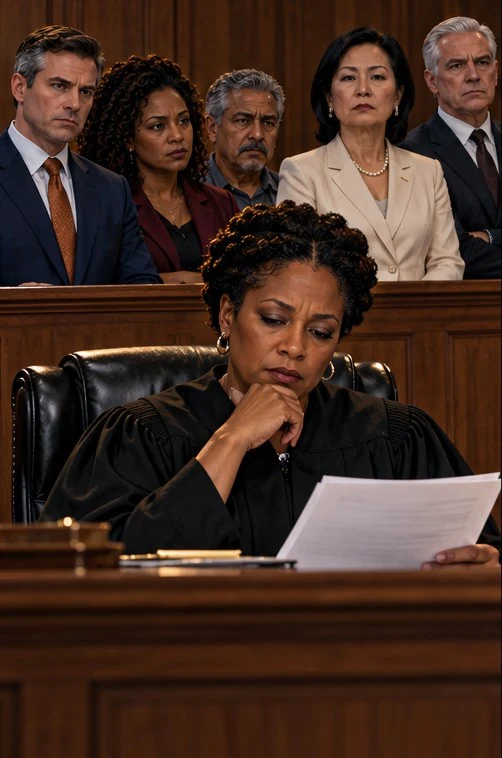
Judge Okafor issued written findings after trial: Atlas's surcharge demand lacked good faith; its late exclusion was not adopted; its failure to provide proper timely delivery breached the original sale. She awarded the supported cover difference, deposit recovery, and proved additional losses without duplication. Unsupported projected expansion profits were denied.
OKAFOR
Relief follows the established agreement and demonstrated loss.
NAOMI
We did not get everything we asked for.
MERCER
We got what this record supported. Keep the distinction.
PRIYA
The rejected projections never belonged in the operating budget anyway.
The civil standard is ordinarily preponderance for these claims; allocation of proof on particular defenses varies. The judgment may be challenged through available post-trial and appellate procedures.
SCENE 3 · PDF PAGE 44
Three Endings
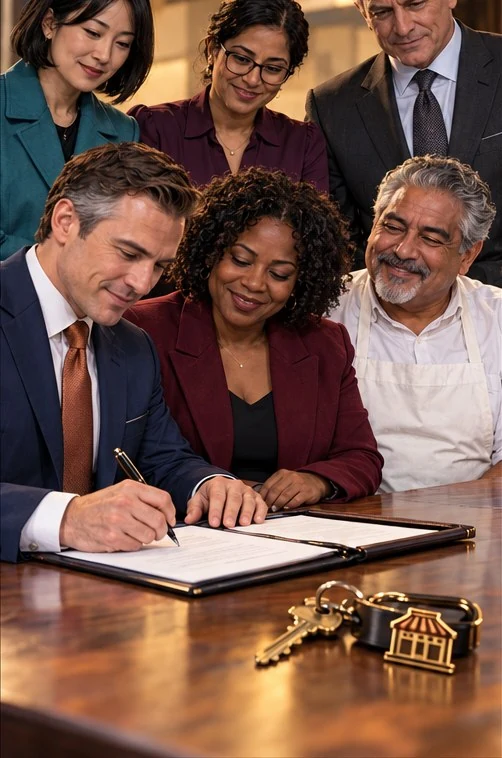
Northstar settled the disputed reliance claim for $12,000 after examining the invoices and retained value. It made no admission of liability. Hale separately agreed to close on the original purchase terms under a written settlement after the court rejected his notice argument. Naomi accepted the alternate financing with advice on its repayment obligations.
CHEN
The settlement resolves the grant dispute. It is not the promised forty thousand.
NAOMI
I understand the release and the amount.
HALE
You are buying a very old building.
MERCER
With a very clear closing agreement.
The foundation settlement is a negotiated result, not a judicial declaration of the exact estoppel remedy. The property purchase remains a purchase; the bakery still has to pay.
SCENE 4 · PDF PAGE 45
Opening Time
At sunrise Rafael slid the first tray into the replacement oven. June watched the door as though a late document might still try to enter. Priya had already asked about the loan reserve. Naomi unlocked the front entrance herself. I stood back. Winning had not made the business risk-free. It had made the promised choices available again.
RAFAEL
You want your usual coffee?
MERCER
And a receipt. Professional reflex.
NAOMI
We have a building, an oven, and a loan to repay.
MERCER
Then tomorrow belongs to work we can actually plan.
A promise is not kept because a lawyer gives a good speech. It is kept by performance, or answered through a remedy the law and the evidence can support.
THE LAW BEHIND THE STORY
Contracts study notes
Organize by agreement and party
Begin with governing law, formation, and enforceability. Identify offer, acceptance, consideration or an alternative basis, writing requirements, authority, and defenses. Keep the option, financing promise, oven sale, and renovation work distinct. A sympathetic narrative does not combine different defendants' duties.
Move from terms to breach
Determine incorporated terms, interpretation, integration, warranties where relevant, and valid modifications or waivers. Then analyze conditions, performance, breach, repudiation, cure, and possible excuse. Address the strongest opposing factual interpretation. Explain why a record proves a proposition rather than merely naming the exhibit.
Finish with a tailored remedy
Identify expectation, reliance, restitution, or equitable relief. Apply causation, foreseeability, certainty, avoidability, and valid contractual limits as relevant. Show arithmetic and avoid overlap. Keep settlement amounts separate from legal entitlement. Do not assume a loss of trust permits punitive damages for ordinary breach.
Change facts to test the rule
If the option notice arrived after five, analyze lateness and any waiver rather than the ordinary mailbox rule. If a genuine supply disruption supported a good-faith surcharge, the modification issue changes. If the original sale validly excluded consequential loss, incorporation is no longer the question. If Naomi could reasonably save catering orders but chose not to, avoidability becomes decisive.